
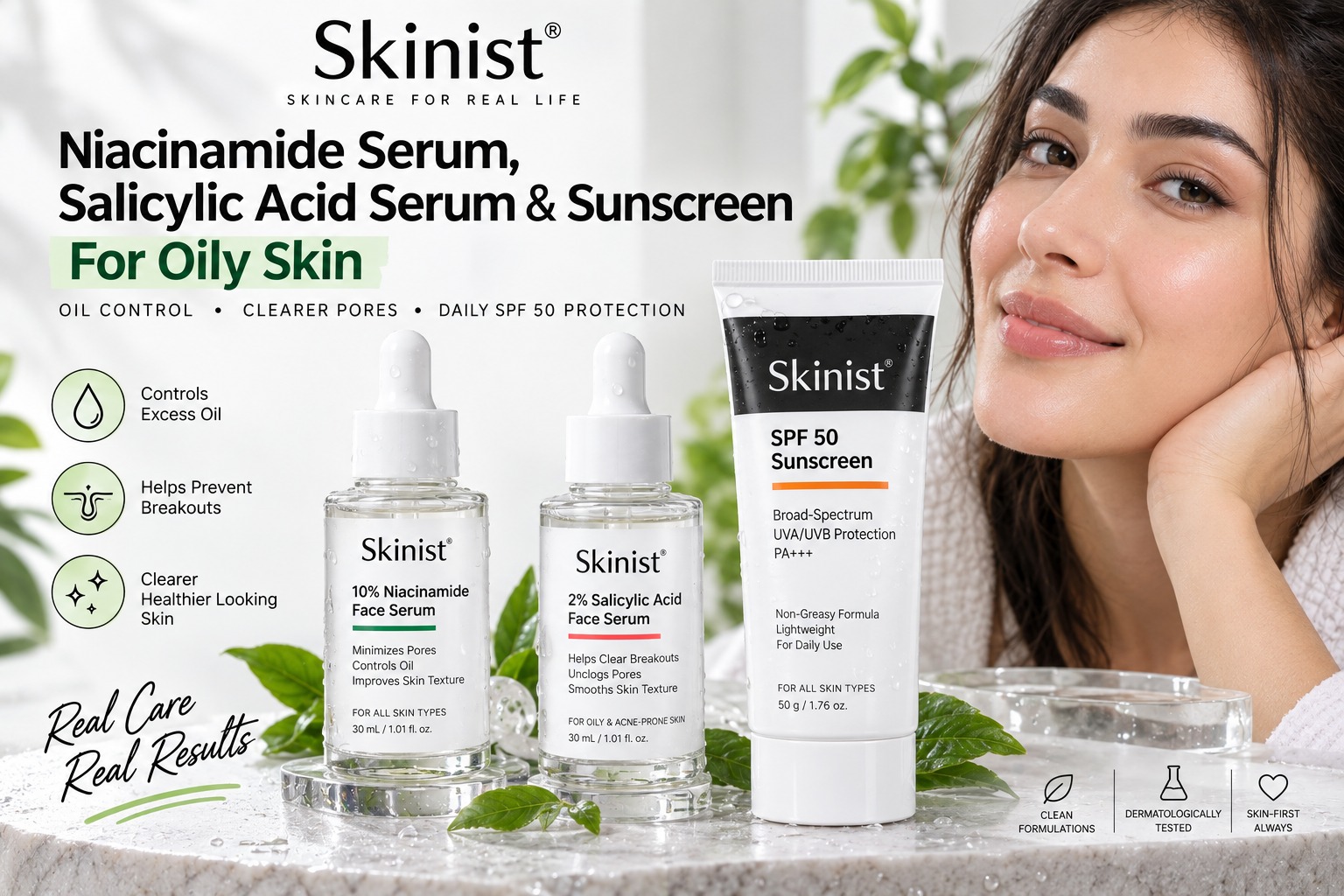
Oily skin can be challenging to manage, especially in a hot and humid climate. Excess oil, clogged pores, uneven texture, and frequent shine can make the skin look tired throughout the day. A simple routine with carefully selected products can help maintain a balanced and comfortable appearance.
Three products that can complement an oily-skin routine are Niacinamide serum, salicylic acid serum, and sunscreen for oily skin. Each serves a different purpose, so understanding how and when to use them is important.
Niacinamide Serum for Oily Skin
A niacinamide serum is a popular choice for people with oily or combination skin. Niacinamide, also known as vitamin B3, is commonly used in skincare to support the skin barrier and improve the appearance of uneven skin tone and excess oil.
For oily skin, a lightweight serum can be easier to incorporate into a daily routine without making the skin feel heavy. Apply it after cleansing and before moisturizer.
If you are new to niacinamide, start gradually and observe how your skin responds. Consistency is generally more important than applying several layers of different products.
Salicylic Acid Serum for Oily Skin
A Salicylic acid serum is formulated with a beta hydroxy acid (BHA) that can penetrate into oily areas and help exfoliate inside pores. It is commonly used in routines targeting clogged pores, excess oil, and rough-looking skin texture.
Because salicylic acid is an active ingredient, avoid immediately combining it with numerous other strong exfoliating products. Begin with occasional use and increase frequency only if your skin tolerates it.
After applying the serum, use a moisturizer to support comfortable skin.
Read also: DUOISGREATFORYOUANDME
Sunscreen for Oily Skin
Daily sun protection is an important part of any skincare routine, including one designed for oily skin. Sunscreen for oily skin should ideally feel lightweight and comfortable enough for regular use.
Apply sunscreen as the final step of your morning skincare routine. Reapplication may be needed when spending extended periods outdoors, particularly after sweating or exposure to water.
Choosing a formula that does not feel excessively greasy can make daily sunscreen use easier to maintain.
Simple Routine for Oily Skin
| Time | Step | Purpose |
| Morning | Cleanse | Remove excess oil and buildup |
| Morning | Niacinamide Serum | Support balanced-looking skin |
| Morning | Moisturizer | Maintain skin hydration |
| Morning | Sunscreen for oily skin | Protect skin from UV exposure |
| Evening | Cleanse | Remove sunscreen and daily buildup |
| Evening | Salicylic Acid Serum | Exfoliate and help with clogged pores |
| Evening | Moisturizer | Support the skin barrier |
How to Avoid Overloading Your Skin
Using more products does not necessarily mean better results. If your skin is oily, you may still need hydration. Over-cleansing or excessive exfoliation can leave your skin feeling dry, tight, or irritated.
Introduce one new product at a time. If you experience persistent irritation, reduce use or stop the product and consider professional Skinist advice.
Read also: DUOISGREATFORYOUANDME
Final Thoughts
A straightforward routine can make oily skin easier to manage. Niacinamide serum can complement daily skincare, while salicylic acid serum can be useful for exfoliation and clogged pores. During the daytime, sunscreen for oily skin helps provide essential UV protection.
The key is to choose lightweight products, introduce active ingredients gradually, and maintain a consistent routine rather than using too many products at once.
Read Also: thealitekeepsafe.com